

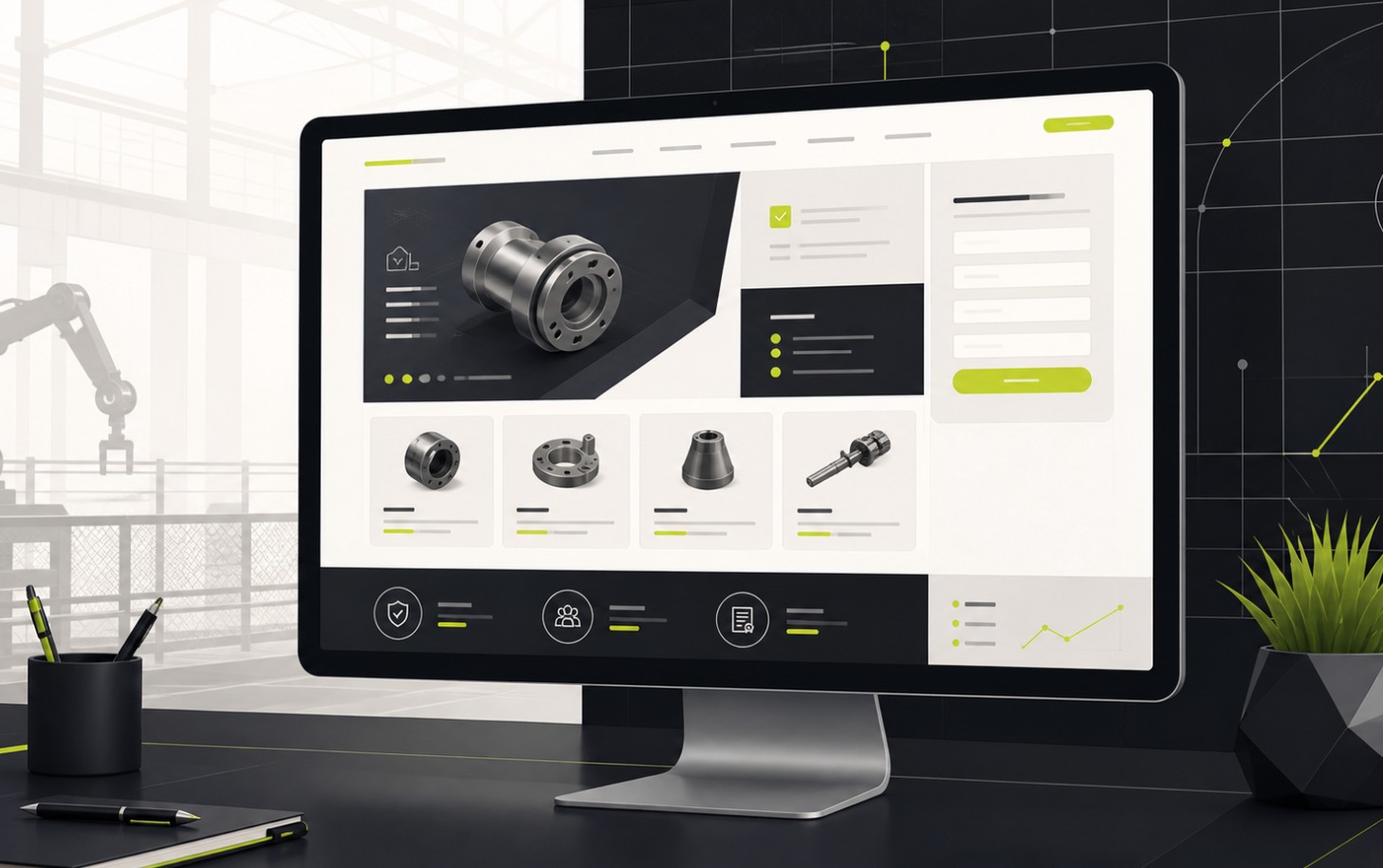
Manufacturing website design
Modern manufacturing buyers use websites to judge credibility before they speak to sales. A stronger site helps them understand the offer, trust the business and take the next step with confidence.
A manufacturing website is often the first place a serious buyer tests whether a company feels credible. They may already know the business name, have seen a product, received a recommendation or found the company through search. The website then has to do more than confirm that the company exists.
It needs to help the buyer understand what the manufacturer does, where it is strongest, why it is relevant to their situation and whether it can be trusted with a technical or commercial requirement.
That is why B2B manufacturing marketing and website design need to work together. A website is not just a digital brochure. It is a confidence-building part of the sales process.
Credibility starts with immediate clarity
Manufacturing businesses often try to say too much too early, or they rely on product categories that make sense internally but not to a new buyer. A credible website should quickly answer three questions: what does the company do, who is it best suited to help and why should the buyer keep reading?
- A clear proposition on key landing pages.
- Simple routes into products, services, sectors or applications.
- Language that connects technical capability to buyer value.
- Visible proof that the business has solved similar problems before.
Technical depth should be easy to navigate
Technical buyers do not want vague marketing language. They need evidence, specifications, applications, use cases, compliance details, process explanations and confidence that the supplier understands their world.
The challenge is to present that information in a way that supports decision-making. Good manufacturing website design makes depth accessible. It lets buyers scan quickly, then go deeper when they need to.
Proof matters more than polish alone
Visual quality is important because buyers make fast judgements. But a polished website without proof can still feel thin. Case studies, project examples, sector experience, certifications, product imagery, process photography and measurable outcomes all help buyers reduce perceived risk.
Proof in practice: Projects such as Nolek, a1-cbiss and MEB Total show how clearer digital presentation can make technical and B2B businesses feel more confident, current and commercially useful.
Product pages should support buying decisions
Many manufacturing websites treat product pages as static lists. Modern buyers need more help. They want to know where a product is used, which problem it solves, how it compares with alternatives, what evidence supports performance and what the next step should be.
- Use plain-language summaries before technical detail.
- Group related products or applications around buyer needs.
- Add enquiry routes that match the stage of the journey.
- Include content that answers common questions before sales calls.
- Link from technical pages to relevant case studies and service support.
Search visibility depends on useful structure
A credible manufacturing website also needs to be findable. Strong SEO and search content are easier to build when the site structure reflects how buyers search, compare and shortlist suppliers.
That means mapping pages around problems, sectors, capabilities and questions, not only internal departments. It also means using internal links to connect product information, thought leadership, case studies and conversion pages.
The site should make enquiry feel natural
A buyer may not be ready to send a detailed brief immediately. Some will want to download information, compare options, ask a technical question, book a conversation or simply understand whether the company is a fit. A credible website gives them clear next steps without making every page feel like a hard sell.
This is where website design becomes part of B2B lead generation. The goal is not only more enquiries. It is better-informed enquiries from buyers who already understand why the business is relevant.
A credible website reflects the business you are now
Manufacturers often evolve faster than their websites. New markets, new capabilities, stronger teams and better proof can all be hidden behind an old digital identity. A stronger website closes that gap. It helps the outside world see the business as it is today, and as it is ready to become.
FAQs
What should a manufacturing website include?
A manufacturing website should include clear positioning, product or service detail, sector relevance, technical proof, case studies, strong navigation, useful content and clear enquiry routes.
Why do manufacturing websites need case studies?
Case studies help buyers reduce risk. They show real applications, sector experience and evidence that the business can deliver beyond a list of capabilities.
How does website design support lead generation?
Good website design helps buyers understand the offer, trust the business and find the right next step. This improves the quality of enquiries and supports sales conversations.
Should manufacturing websites be technical or simple?
They should be both clear and technically useful. Buyers need accessible summaries, but they also need the option to go deeper into specifications, applications and proof.
Next step: If your manufacturing website no longer reflects the business you have become, explore our B2B manufacturing marketing approach or speak to us about a wider full-service marketing programme.